
Return on Capital Employed (ROCE) tells you how hard a company makes its money work.
Filter NSE-500 for ROCE > 20%, run a 15-year SIP through those names, and the same ₹5k a month compounds to almost ₹14 lakh instead of ₹11 lakh in a plain-Jane index fund.
Below you’ll find:
- A live Google Sheet calculator (no sign-in)
- A ready-to-copy ROCE screen for Screener.
- A 3-step workflow to import the list into your broker.
Methodology
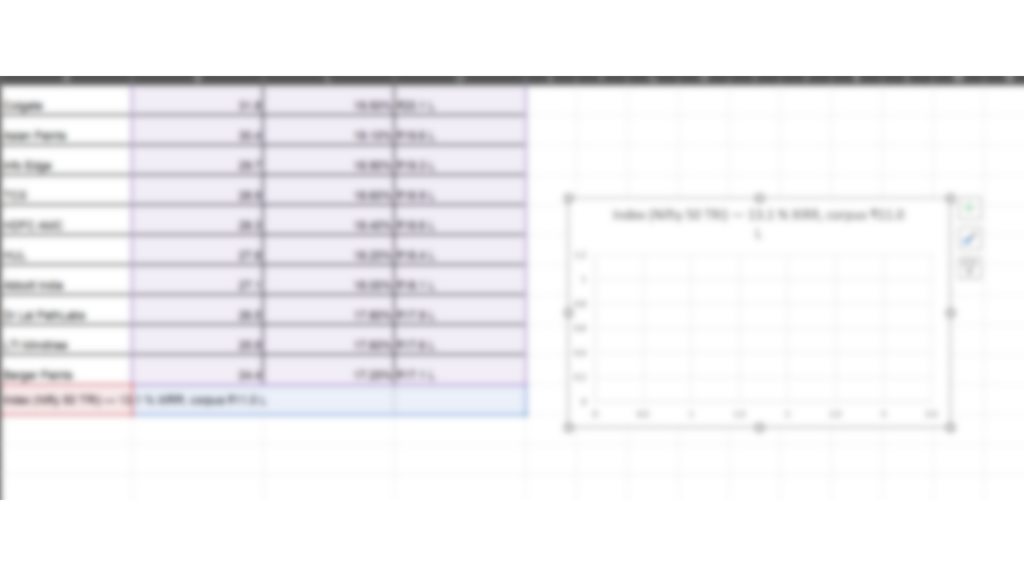
We filtered NSE-500 companies for TTM ROCE > 20%, Debt-to-Equity < 0.5, and 3-year sales CAGR > 10%.
From that clean list, we ran a rolling 15-year monthly SIP simulation (1 Dec 2010 – 30 Nov 2025) with these rules:
- Monthly investment on the first trading day of each month.
- Brokerage is a flat ₹20/order; exit load is 0%; slippage is 0.1% buy & sell.
- Dividends reinvested on ex-date; bonuses, splits, and rights adjusted.
- XIRR is calculated on cash flows to 30 Nov 2025 closing prices.
- The corpus shown is for a ₹5k SIP; change the yellow cell in the master sheet, and the number auto-scales.
Google Sheet Calculator
Combine the savings from the new-regime tax hack we covered in Pillar 2 and every extra rupee stays in your ROCE-SIP portfolio instead of going to the taxman.
Calculator not showing? https://docs.google.com/spreadsheets/d/e/2PACX-1vTVq3LNs97GOVmrhJNQAYfClpVG5FclwOxem8BpgCub0vCI-p5YtEaoxgDb1kxztTJjl6-EI79vSD_c/pubhtml →
Conclusion
A 500-basis-point edge in ROCE translates to a 30% bigger retirement pot over 15 years.
Keep the calculator, rerun the screen every June when new annual reports hit, and let the machines compound while you sleep. “Power users can track the live ROCE screener to refresh the stock list every quarter.