
Loans can help you achieve big goals like buying a house, funding education, or managing emergencies. But if not handled properly, loans can become a financial trap that destroys your savings and future wealth. In India, easy access to credit cards, personal loans, and instant apps has made borrowing easier than ever — but also more dangerous. Loans and debt control are very important parts of personal finance in India.
Many people fall into financial stress without proper planning. While loans can help achieve big goals, poor debt control can lead to long-term money problems. Loans have become a part of modern life in India. From home loans and education loans to credit cards and personal loans, borrowing money is easier than ever. But easy access to loans also increases the risk of falling into a debt trap. Loans themselves are not bad.
This complete guide on loans and debt control will help you understand different types of loans in India, manage EMIs smartly, repay debt faster, and avoid common borrowing mistakes.
In this complete guide on loans and debt control in India, you will learn how different loans work, how to borrow safely, manage EMIs, repay debt faster, and avoid common mistakes that keep people stuck in debt for years. According to the Reserve Bank of India, borrowers should carefully check loan terms and repayment capacity before taking loans.
Understanding Different Types of Loans for Better Loans and Debt Control
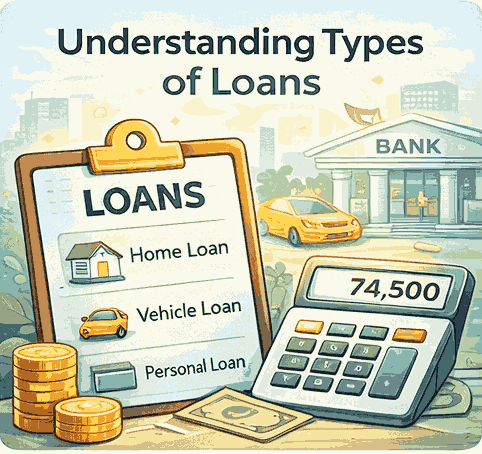
Before taking any loan, it is important to understand the type of loan and its purpose.
Secured Loans
These loans are backed by an asset.
Examples:
Home loan
Car loan
Loan against property
👉 Lower interest because the asset is pledged.
They usually have lower interest rates because the lender has security.
Unsecured Loans
These loans do not require any assets as collateral.
Examples:
Personal loan
Credit cards
Buy now, pay later
👉 Higher interest because no collateral.
Good Loans vs Bad Loans
Good loans help you build assets or improve income.
Examples:
Home loan
Education loan
Bad loans are mostly for consumption.
Examples:
High-interest personal loans
Credit card revolving balances
Understanding this difference helps in better debt control.
When Taking a Loan Makes Sense
Taking a loan is justified when:
It helps build a long-term asset
It improves earning capacity
EMI fits comfortably in your budget
The interest rate is reasonable
A simple rule is that total EMIs should not exceed 30 to 35 percent of your monthly income.
Why Loans Are Risky in India and Interest Traps
Many people focus only on EMI and ignore the total cost of the loan.
Common traps include:
High interest on credit cards
Long loan tenure increases total interest
Minimum due payment illusion
Processing fees and hidden charges
Always check the total repayment amount before signing any loan agreement.
How EMI Works for Strong Loans and Debt Control
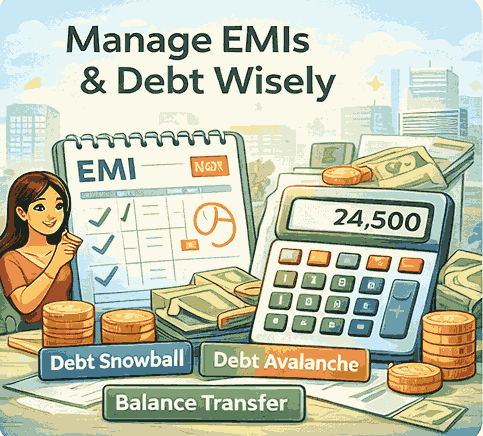
Every loan has an EMI (Equated Monthly Installment).
EMI includes:
- Principal (loan amount)
- Interest
👉 In early years:
- You pay more interest
- Less principal
👉 In later years:
- Interest reduces
- Principal increases
Smart Borrowing Strategy
Before taking any loan, follow this:
1. Check EMI affordability
👉 EMI should not exceed 30–40% of income
2. Maintain an emergency fund
At least 6 months expenses
3. Compare lenders
Small rate difference = big savings
4. Choose a shorter tenure
Lower total interest
👉 Loan decision should be calculated, not emotional.
Debt Repayment Strategies (Very Powerful Section)
1. Debt Snowball Method
- Pay the smallest loan first
- Builds motivation
2. Debt Avalanche Method (Recommended)
- Pay the highest-interest loan first
- Saves maximum money
👉 Always prioritize:
Credit card → Personal loan → Other loans
Good EMI management prevents stress.
Some smart practices:
Keep EMIs within affordable limits
Avoid multiple loans at the same time
Increase EMI when income increases
Prepay whenever possible
A disciplined approach can save lakhs in interest over time.
Balance Transfer and Prepayment
Transferring high-interest loans to lower-interest options can reduce the burden.
Choose the method that suits your psychology and cash flow.
Loans and debt control work best when borrowers clearly understand interest rates, loan tenure, and total repayment amount. With proper loans and debt control planning, you can avoid unnecessary interest payments and become debt-free faster.
Smart money habits make loans useful instead of stressful.
Loan Comparison Strategy (Decision Making)
Before choosing any loan:
Check:
- Interest rate
- Processing fee
- Prepayment charges
- Flexibility
👉 Even 0.5% lower rate can save lakhs over time.
Strategy Comparison Table
Method | Best For | Advantage
Snowball | Motivation seekers | Quick wins
Avalanche | High-interest debt | Saves more money
Example Debt Plan
Example: ₹3 Lakh Debt Strategy
Loan Type | Amount | Rate | Priority
Credit Card | ₹80,000 | 36% | First
Personal Loan | ₹1,20,000 | 16% | Second
Consumer Loan | ₹1,00,000 | 12% | Third
Paying the highest interest first saves money faster.
Action Checklist
Debt Control Checklist
• Stop new borrowing
• Track all debts
• Prioritize high-interest loans
• Automate payments
How to Improve CIBIL Score (650 to 750+)
Your credit score directly affects your loan cost.
Steps to improve:
- Pay EMIs on time
- Keep credit utilization below 30%
- Avoid multiple loans
- Maintain old credit accounts
👉 A good score can reduce your interest rate significantly.
Real Case Study (Powerful Insight)
Loan: ₹20 lakh
Tenure: 20 years
Rate: 8.5%
👉 Total interest paid ≈ ₹21 lakh
Now:
Prepay ₹1 lakh in year 3
👉 Interest saved ≈ ₹2–3 lakh
👉 Lesson:
Small prepayments create huge savings
Warning Signs of a Debt Trap
- More than 3 EMIs running
- Using a credit card for basic expenses
- Paying only the minimum due
- No savings left
👉 If you see these, act immediately.
Debt Control Plan (Actionable Strategy)
- List all loans
- Identify the highest interest debt
- Start aggressive repayment
- Stop taking new loans
- Increase income if needed
👉 Discipline is the only debt solution.
Use These Free Loan and Debt Calculators

To manage loans better:
Use our EMI Calculator
Credit Card Interest Calculator
Budget Planner
👉 These tools help you reduce financial mistakes.
Before taking out or repaying a loan, calculation is essential.
On FinanceRead, you can use:
Loan EMI Calculator
Loan and Credit Calculator.
Credit Card Debt Calculator: shocking math.
Example: ₹50,000 credit card bill, paying only the minimum due (5%)
Month 1: Paid ₹2,500, Interest ₹1,500, Balance ₹49,000
Month 6: Balance ₹47,000 (despite paying ₹15,000!)
Year 1: Balance ₹42,000 (paid ₹30,000, reduced debt only ₹8,000)
Total cost if paid in 3 years: ₹72,000 (44% extra!)
You can also explore our Personal Finance Calculators Hub to plan borrowing wisely.
Using calculators helps you see the real cost of debt clearly.
2026 Home Loan Interest Rates” Comparison Table
| Bank | Floating rate | Processing Fee | Best For |
SBI | 8.50-9.10% | 0.35% | Government employees |
HDFC | 8.60-9.20% | 0.50% | Quick disbursement |
ICICI | 8.70-9.30% | 0.50% | Pre-approved offers |
Axis | 8.75-9.35% | 1% | Balance transfer |
Common Loan Mistakes Indians Make
Taking a loan without budgeting
Ignoring interest rate and tenure
Using credit cards is like having free money
Only paying the minimum due
Borrowing to repay existing loans
Avoiding these mistakes is the first step towards debt freedom.
Frequently Asked Questions on Loans and Debt
Is taking a loan always bad?
No. Loans are useful when used responsibly for the right purpose.
How much EMI is safe?
Ideally, not more than 30 to 35 percent of the monthly income.
Should I prepay loans early?
Yes, especially high-interest loans.
Is credit card debt dangerous?
Yes, if the revolving balance is not cleared monthly.
Can budgeting help in debt control?
Absolutely. Budgeting is the foundation of debt management.
Final Thoughts on Smart Borrowing and Debt Control
Loans can help you move forward or pull you backward.
The difference lies in how you use them.
Smart borrowing means:
Understanding loans
Planning EMIs
Avoiding unnecessary debt
Repaying efficiently
Use calculators, plan carefully, and treat loans as tools, not habits.
If you want more simple guides on managing money, loans, and investments, you can subscribe to our email list and grow financially confident step by step.