
Your credit history is a significant factor in determining your eligibility for credit cards and loans in today’s financial system. Many people only learn about CIBIL scores when a loan application is denied, but being aware of it early on can help you avoid missed chances and financial stress.
A CIBIL score is a three-digit number ranging from 300 to 900 that reflects your creditworthiness. It is based on your borrowing and repayment history and helps lenders decide whether to approve your loan or credit card.
In India, this score is generated by TransUnion CIBIL, one of the leading credit bureaus.
👉 Simply put, a higher score means you are financially reliable.
CIBIL is the primary credit bureau in India, and its credit score is one of the most important factors used by banks and NBFCs to evaluate borrowers.
What is CIBIL
In order for everyone to comprehend how CIBIL operates and why it is important, this tutorial explains it in simple terms. A credit information bureau called CIBIL gathers and keeps track of a person’s borrowing and repayment patterns. It keeps track of credit cards, loans, payment histories, and unpaid balances that banks and other financial organizations report.
Your CIBIL score is not just a number—it is a summary of your entire credit behavior. It tells banks how responsibly you handle borrowed money.
Whenever you take a loan or use a credit card, your repayment behavior is recorded. This data is collected and analyzed to generate your score.
Banks, NBFCs, and even some employers may check this score before making financial decisions.
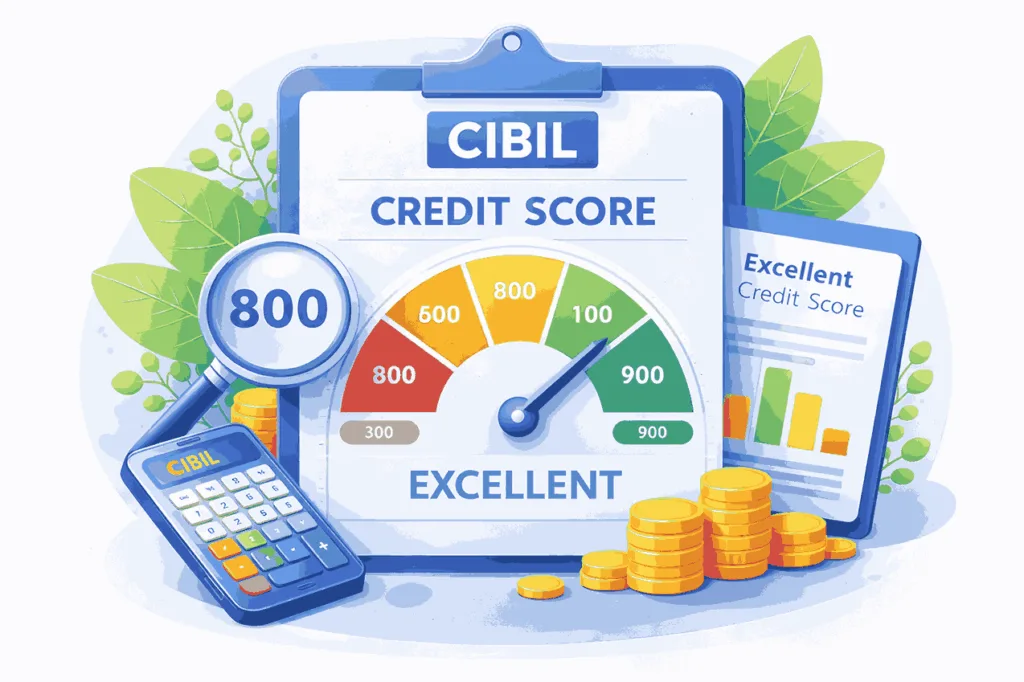
cibil credit score report
The Significance of CIBIL Score
Your CIBIL score affects almost every major financial decision:
1. Loan Approval
Banks use your score as the first filter. A low score often leads to rejection.
2. Interest Rates
Higher score = lower interest rate
Lower score = higher interest rate
3. Credit Card Eligibility
Premium cards are only offered to individuals with strong scores.
4. Loan Amount
A better score increases your borrowing capacity. Obtain loan approvals more quickly
5. Faster Processing
High-score applicants get quicker approvals.
👉 In short, your CIBIL score directly impacts your financial freedom.
Here’s how lenders interpret your score:
300 – 549 → Poor
550 – 649 → Average
650 – 749 → Good
750 – 900 → Excellent
👉 Most banks prefer a score above 750 for easy approval.
How the CIBIL Score Is Calculated
This is where most blogs stay shallow—but this section gives you a real ranking edge.
Your score is calculated using these weighted factors:
- Payment History (approx. 35%)
- Credit Exposure / Utilization (approx. 30%)
- Credit Type and Duration (approx. 15%)
- Other factors, like inquiries (approx. 20%)
This means even a single late payment can significantly reduce your score
5 Key Factors That Affect Your CIBIL Score
1. Payment History
This is the most critical factor.
If you delay EMI or credit card payments, it sends a negative signal to lenders.
👉 Even one missed payment can reduce your score sharply.
2. Credit Utilization Ratio
This is the percentage of your credit limit that you use.
Example:
If your limit is ₹1,00,000 and you use ₹70,000 → utilization = 70%
👉 Ideal usage should be below 30%.
3. Credit Mix
Having both secured and unsecured loans improves your score.
Secured loans: Home loan, car loan
Unsecured loans: Credit cards, personal loans
👉 A balanced mix shows financial stability.
4. Length of Credit History
Older accounts build trust.
Closing old credit cards can reduce your score because it shortens your credit history.
5. Hard Inquiries
Each time you apply for a loan, a “hard inquiry” is recorded.
Too many inquiries signal financial stress.
How to Improve Your CIBIL Score
Step 1: Pay All Dues on Time
Never miss EMI or credit card payments.
Step 2: Reduce Credit Usage
Keep utilization below 30%.
Step 3: Avoid Multiple Loan Applications
Apply only when necessary.
Step 4: Keep Old Accounts Active
Do not close your oldest credit card.
Step 5: Check Your Credit Report
Look for errors and report them.
Common Misconceptions Regarding CIBIL
A lot of folks don’t understand how CIBIL operates. Among the prevalent myths are:
Examining your own CIBIL score lowers it.
The CIBIL score is solely determined by income level.
The score rises when old credit cards are closed.
It is impossible to raise a low score.
In actuality, proper credit behavior is more important than job type or salary.
Common Mistakes That Damage Your Score
- Missing payments
- Using the full credit limit
- Closing old accounts
- Applying for multiple loans
- Ignoring report errors
👉 Avoiding these mistakes is as important as improving your score.
Myths vs Facts About CIBIL Score
Myth: Checking your score reduces it
Fact: Soft checks do not affect your score
Myth: High income means high score
Fact: Score depends on behavior, not salary
Myth: No loan means good score
Fact: No credit history = low or no score
Real-Life Example (Understanding Impact)
Let’s say two individuals apply for a ₹5 lakh personal loan:
Person A: Score 780
Person B: Score 620
Result:
- Person A gets a loan at 10% interest
- Person B gets a loan at 16% interest
Over time, Person B pays significantly more interest.
👉 This shows how your score directly affects your money.
Advanced Tips (Most People Don’t Know)
- Use a credit card for small expenses and repay fully
- Increase your credit limit, but keep usage low
- Maintain long-term accounts
- Avoid settling loans (it negatively impacts your score)
Final Thought
Anyone who intends to borrow money or handle credit responsibly has to understand CIBIL. While a low CIBIL score restricts options and raises expenses, a high score opens doors to better financial opportunities. You can safeguard your credit health and create long-term financial stability by understanding how CIBIL operates and upholding responsible financial practices.
Maintaining a healthy CIBIL score requires disciplined repayment habits and regular monitoring of your credit report.
Your CIBIL score is not just a number—it is your financial reputation.
Maintaining a good score helps you:
- Get loans easily
- Save money on interest
- Access better financial products
Start managing your credit wisely today, and your future financial opportunities will improve significantly.
Frequently Asked Questions (FAQs)
Q1. What is a good CIBIL score in India?
A score above 750 is considered excellent.
Q2. Can I improve my CIBIL score in 30 days?
Yes, small improvements are possible by paying dues and reducing usage.
Q3. How often does the CIBIL score update?
It updates monthly based on lender reports.
Q4. Is a CIBIL score mandatory for a loan?
Most lenders check it before approval.
Q5. What is the minimum score for a personal loan?
Usually 650+, but varies by lender.