

Tax Shield Calculator: Maximizing Tax Benefits
Most people try to save tax by investing in different schemes, but very few actually understand how tax saving works in real terms.
You might be investing in 80C, paying loan interest, or claiming deductions—but do you know how much tax you are actually saving?
That’s where a tax shield calculator becomes useful.
It helps you clearly see:
👉 How much tax you can save
👉 How deductions reduce your taxable income
Short introduction
Created by Shaikh Farooque Akhtar, MBA, CFA | Reviewed by SK Waseem, BCom (Honours), MBA (Finance)
Last reviewed: [July 2026]
Why Use a Tax Shield Calculator for Tax Planning?
A tax shield calculator helps individuals understand how deductions and exemptions reduce taxable income and lower overall tax liability in a simple and practical way.
What is a Tax Shield (Simple Explanation)
A tax shield is the reduction in taxable income or tax liability that can result from an eligible deduction or tax-deductible expense under applicable tax rules. For accurate details on deductions, you can refer to the official income tax rules in India.
In simple words:
👉 You pay less tax because certain expenses or investments are allowed as deductions.
These can include:
- home loan interest
- investments under Section 80C
- business expenses
- insurance and medical deductions
All these act like a “shield” that protects part of your income from tax.
How a Tax Shield Calculator Helps You
A tax shield calculator is a simple tool that shows your actual tax savings based on your deductions.
Instead of guessing, you can:
- Estimate your potential tax savings
- Compare different investment options
- Plan your tax strategy better
👉 It makes tax planning more practical, not confusing.
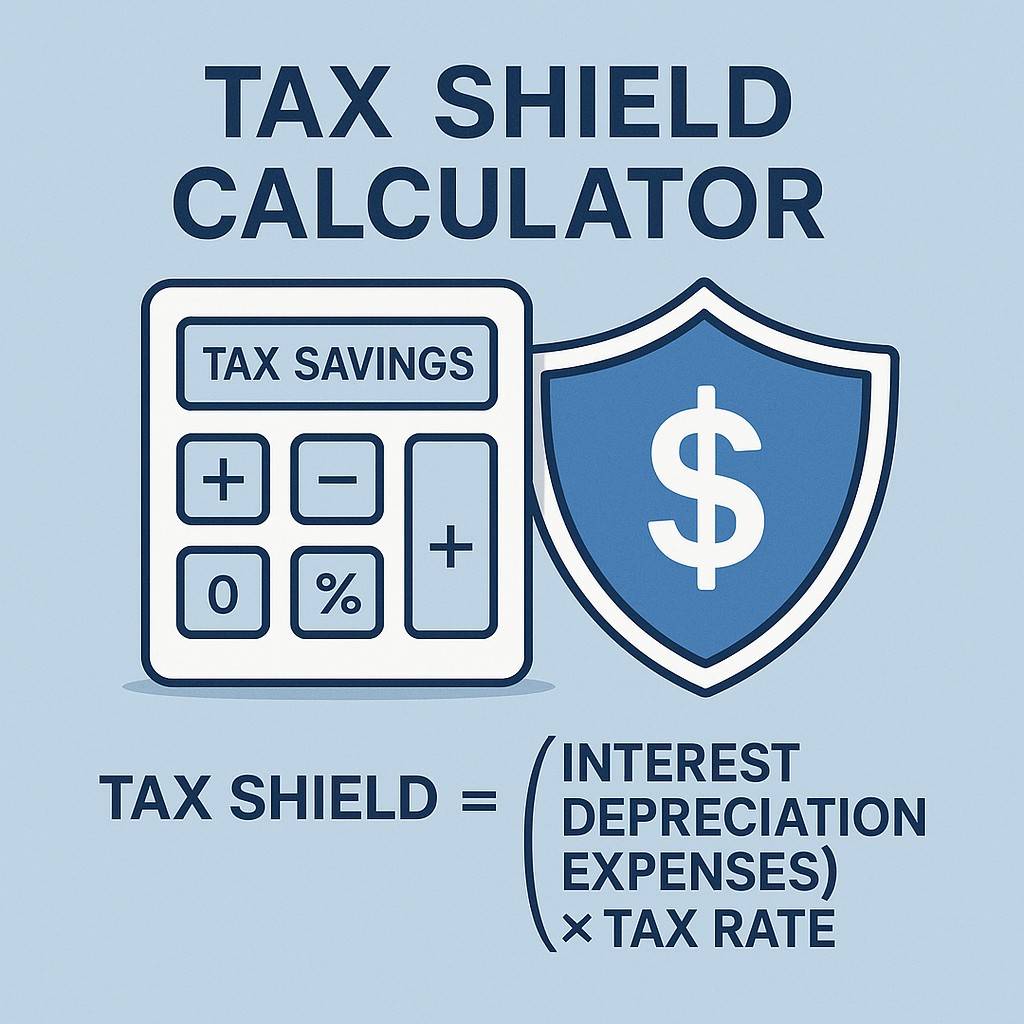
Simplified Tax Shield Formula
For a basic illustration, potential tax benefit can be approximated as:
Eligible deduction × applicable marginal tax rate
However, actual tax savings can differ because of deduction limits, tax regime, rebate provisions, cess, surcharge and other applicable rules.
Example (Very Important for Understanding)
Let’s take a simple case:
- Deduction = ₹1,50,000
- Tax Rate = 20%
Tax Shield = ₹1,50,000 × 20% = ₹30,000
In this simplified example, the estimated tax benefit is ₹30,000 before considering cess, applicable limits, rebates and other tax rules.
How to Use Tax Shield Calculator (Step-by-Step)
If you are using the calculator on your site, explain it like this:
Step 1: Enter Deductible Amount
Example:
- ₹1,50,000 (80C investment, loan interest, etc.)
Step 2: Enter Tax Rate
Example:
- 10%, 20%, or 30%
Step 3: Click Calculate
👉 You will instantly see your tax savings.
Types of Tax Shield (Important for Clarity)
1. Interest Tax Shield
If you take a home loan or business loan, the interest paid can reduce your taxable income.
2. Investment and deduction-related tax benefits
Businesses can also have tax shields from deductible expenses such as eligible interest and depreciation, but those calculations follow different rules from individual income-tax deductions.
Why Tax Shield is Important
Most people focus only on earning money, but saving tax is equally important.
Here’s why:
- Reduces your overall tax burden
- Improves your cash flow
- Helps with better financial planning
- Increases actual savings
👉 In simple terms, tax saved is money earned.
Tax Shield Calculator
Use the FinanceRead Tax Shield Calculator to estimate the potential tax benefit of an eligible deduction by comparing your estimated tax before and after the deduction.
Tax Shield Calculator
Estimate the potential tax benefit of an eligible deduction by comparing your estimated tax before and after the deduction. Select the applicable tax regime and enter your annual income and eligible deduction amount.
Estimated Tax Shield
This is the estimated reduction in tax under the assumptions used by this calculator.
This calculator is an estimate for educational and planning purposes. It uses the regular slab-rate framework for individuals for AY 2026-27 and includes 4% health and education cess. It does not calculate surcharge, capital gains taxed at special rates, special deductions, or every possible tax provision. Always verify your final tax liability using the applicable rules or a qualified tax professional.
How to read the result
The calculator compares your estimated tax before and after applying the eligible deduction you entered.
Estimated Tax Before Deduction shows the tax calculated on your income before the deduction is considered.
Estimated Tax After Deduction shows the estimated tax after subtracting the eligible deduction from your income.
Estimated Tax Benefit is the difference between these two amounts. It represents the estimated reduction in tax resulting from the deduction under the assumptions used by the calculator.
For example, if your estimated tax before the deduction is ₹50,000 and your estimated tax after the deduction is ₹20,000, the estimated tax benefit is ₹30,000.
The result is only an estimate. Your actual tax liability may differ because of deduction limits, rebate provisions, surcharge, special-rate income, exemptions and other applicable tax rules.
Real-Life Example (Easy to Relate)
Let’s compare two people:
Suppose two taxpayers have the same income, but one has eligible deductions available under the chosen tax regime. The taxpayer with eligible deductions may have lower taxable income and therefore a lower tax liability. The actual savings depend on the tax regime, applicable deduction limits and tax slab.
Common Mistakes People Make
Many people misuse tax-saving opportunities.
Avoid these mistakes:
- investing only to save tax (without planning)
- not calculating the actual benefit
- ignoring tax slab
- missing eligible deductions
Estimate the tax benefit before investing, and make sure the investment also fits your financial goals.
When Should You Use a Tax Shield Calculator?
You should use it when:
- planning tax-saving investments
- calculating home loan benefits
- managing business expenses
- estimating the potential tax benefit of eligible deductions
Tax Savings
Calculate your potential tax savings in 30 seconds.
Pro Tip (Very Important)
Don’t just invest to save tax.
👉 Choose options that:
- Saves tax
- Also gives good returns
For example:
- ELSS → tax benefit under applicable rules + market-linked growth potential
- PPF → tax benefit under applicable rules + government-backed savings structure
Example:
Final Thought
A tax shield is more useful when you understand exactly which deduction applies to you and under which tax regime. The goal should not be to invest or spend money simply to reduce tax. The goal is to use eligible tax benefits while making sound financial decisions.
Once you understand it, you can:
- plan better
- invest smarter
- Reduce your tax burden
So before making any tax-saving decision:
👉 always calculate your actual benefit.
FAQs
1. What is the significance of the Tax Shield Calculator?
The Tax Shield Calculator is crucial for individuals and businesses to understand the tax benefits they can derive from various deductible expenses. It helps optimize financial decisions and reduce tax liabilities.
2. What expenses are typically eligible for tax shields?
Common expenses eligible for tax shields include interest expenses on loans, depreciation of assets, amortization of intangible assets, and business operating losses carried forward.
3. How does the tax shield impact financial decisions?
The tax shield can influence financial decisions by highlighting the potential tax savings associated with specific expenses. This information can guide investment, financing, and depreciation strategies.
4. Is the tax shield applicable to both individuals and businesses?
Yes, the tax shield concept applies to both individuals and businesses. Individuals can benefit from tax deductions such as mortgage interest, while businesses can utilize them for interest and depreciation expenses.
5. Are there any limitations to the tax shield?
While tax shields offer valuable tax benefits, they may be subject to limitations, such as caps on deductions or specific depreciation rules. It is essential to stay informed about tax laws and regulations.
🔗 Related Guides
- Income Tax Calculator India
- Section 80C Tax Saving Calculator
- HRA Calculator India
- Tax Saving Guide India
About the Creator
Farooque Akhtar, MBA, CFA, is the creator of FinanceRead and writes about personal finance, investing, taxation and financial planning.
[Read more about Farooque Akhtar →]
About the Reviewer
SK Waseem, BCom (Honours), MBA (Finance), reviewed the financial content and calculation methodology of this page for accuracy.
[Read more about the reviewer →]
